Radiation done – now what?
- truubynature

- Jun 9
- 8 min read
The radiation treatments were finally over. For six weeks, every ounce of our energy had been focused on getting Kevin through the next treatment, the next side effect, and the next difficult day. We had become so consumed with reaching the finish line that we hadn't given much thought to what would happen once we got there. At this point, we were just glad they were FINALLY FRIGGIN’ DONE.

Then, when the treatments ended, we assumed recovery would begin. Instead, we quickly learned that finishing treatment and healing from treatment were two very different things.
We imagined that the worst was behind us and that each day would bring noticeable improvements – after all, the source of the damage had been removed. Surely things would begin getting better soon, right?
The reality was very different...
Recovery was slooooooooooooooooow
Although the treatments had ended, the side effects had not.
Kevin's throat remained painfully raw. Swallowing was still difficult, eating remained a challenge, and the thick mucus that had developed during treatment continued to dominate both his days and nights. His body was exhausted, his sleep was fragmented, and his energy reserves had been depleted after weeks of enduring one of the most difficult experiences of his life.
What surprised us most was learning that radiation does not simply stop working the moment the final treatment is delivered: the effects continue long after the last appointment, and as a matter of fact, symptoms even intensified for what seemed like forever…
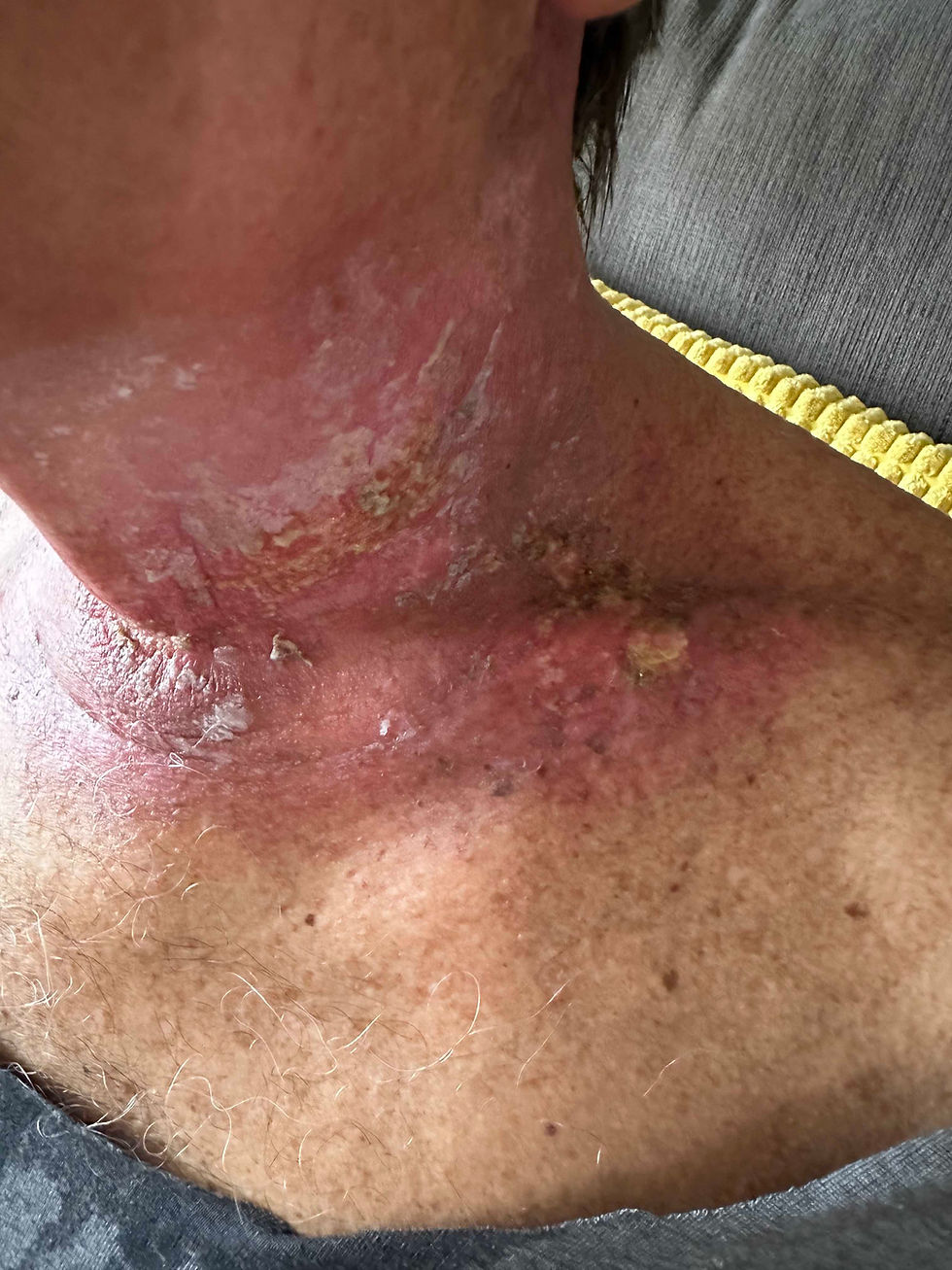
No one had really prepared us for that reality, regardless of how much we were warned it would happen.
In our minds, treatment had been the mountain we needed to climb. We had spent weeks focusing on reaching the summit, only to discover that recovery was an entirely different journey waiting on the other side.
It was frustrating because there is something emotionally uplifting about moving toward a finish line. Recovery, however, offers no countdown. There are no daily milestones, no final appointment to mark completion, and no predictable timeline that guarantees when you will feel like yourself again.
Instead, there there must be a lot of patience… From him, and from me to him. And patience can be surprisingly difficult when all you want is to feel better!
Let’s get on with healing
For the first time in months, we found ourselves waking up without a conventional medical obligation dictating our day. So we dove into alternative treatments to begin the true healing aspect of Kevin’s cancer.

Our days shifted away from treatment and toward recovery. Now our attention turned toward creating the best possible environment for healing.
This meant continuing to prioritize nourishing foods, hydration, rest, emotional wellbeing, and the various supportive protocols that had already become part of Kevin's journey. We understood that the body had been through an enormous ordeal and would need both time and support to rebuild.
In many ways, this stage felt empowering, as weird as this may sound! Rather than focusing on what had already happened, we began focusing on what could be done moving forward to support recovery and strengthen the body's natural ability to repair itself.
One of the greatest lessons we learned throughout this journey was that healing is not something that simply happens while you wait – it requires active participation. It involves making choices each day that support the body, mind, and spirit. It involves creating an environment where healing has the greatest opportunity to occur. We were both exhausted, but looking so forward to this next part!

From here on forward, our next weeks involved trips to the cancer-focused naturopath, alongside other healing alternative modalities:
Vitamin C IVs, three times per week
Vitamin B shots, to further boost the immune system
DMSO gargles daily, sometimes three times per day, to help detoxify the throat and tone down inflammation
Plenty of distilled water (upwards of 6-7 bottles of this per day), with DMSO drops, colloidal silver drops, and added H2O2 to it. This became Kevin’s constant sippy cup.
Smoothies: the new norm. I made them for him 5 or 6 times per day (as much as Kevin could intake since he couldn’t eat/swallow at all). They were packed with precious, highly nutrient dense ingredients like avocado oil, dandelion root tea, some berries, avocado, almond or hemp milk, coconut water for hydration and electrolytes, blanched almond butter, and a whole collection of supplements like buffered vitamin C powder, vitamin A drops, selenium, a few drops of Lugol’s iodine, and some very good quality beef bovine protein powder.
Psyllium husk fibre: it was added to his smoothies as well because radiation has a very nasty effect on the digestive system, causing constipation. Constipation is also the result of drinking your meals rather than chewing, as the body doesn’t signal digestion when drinking as much as when going through the process of eating (chewing, salivating, swallowing).
Throat gargles: He continued the throat spray I made him with aloe vera juice, hyaluronic acid (which you sprinkle on top and let hydrate overnight, before mixing well) and slippery elm extract (also a powder). This also helped quite a bit because now he had no saliva whatsoever, thanks to radiation treatments. More on that recipe in my book.
Red light therapy: We borrowed a friend’s high-end machine, which Kevin used 2-3 times daily to help his throat and neck heal – from the inside out.
Nebulizer: Before bedtime, Kevin nebulized with a saline solution and colloidal silver. This helped calm his saliva glands, which were on high active mode causing a lot of coughing of copious amounts of phlegm, and added irritation. This was a very good, supportive modality for him that also helped calm his mind before “trying” to sleep.
Also at bedtime, Kevin used a steamer in the bedroom, which was filled with purified water and some colloidal silver in it. On the top portion, i added a few drops of lavender and eucalyptus essential oil to calm his mind and also soothe the throat.
Massages: I tried to massage his hands and feet as much as I could. The power of touch is very important at this time, and a definite part of healing.
Neck and skin healing: I made Kevin the RAD gel you will often see me mention, and it helped completely heal the outer part of his skin in under two weeks! It was all he could use, since his skin was still on fire and adding any heavy lotions were out of the question (it would’ve been like putting oil on a frying pan!). After his skin healed, he began using the RAD lotion I created, which helped to soothe and heal the skin. This was also part of the reason why his hair began to grow back - with the exception of the left side of his face, which never regrew again.
Repurposed medications: Kevin continued on taking ivermectin and mebendazole after his radiation treatments. After radiation was completed he had been taking them for nearly three months. He was provided with a personalized protocol to follow that was weight-based, and included other supportive supplements like milk thistle, Berberine, vitamin E, vitamin D with K2, and CBD oil. Doctor Makis had also suggested other supplements but they didn’t sit well with Kevin so he omitted them, and that was fine.


Our typical days looked like this in the first weeks after radiation:
- 8-9am wake-up, and a DMSO throat gargle
- meditation practice, followed by QiGong (if he had the energy for it)
- smoothie
- reading and a rest
- he’d answer a few work-related emails and rested some more
- another smoothie at lunch-time-ish
- lots of gargling with aloe vera juice
- lots of coughing, ice packs, and tissue boxes
- lots more rest, watching a movie, relaxing on the sofa
- at nighttime, another smoothie
- nebulizing with a gentle saline solution and some colloidal silver
- red light therapy on his neck
- bedtime
Mindset is an incredibly important part of healing, and for Kevin, he’d start the day with a mindfulness meditation. He was drawn to transcendental meditations and found some very good videos on YouTube. I’d often see him falling asleep during them, which was perfectly fine because, as we know, the body heals when it sleeps.
When Kevin began to feel hungrier with more of an appetite, we tried a few scrambled eggs because he had begun to crave them; also some mashed sweet potatoes, and a sugar-free jello that i had found. Most foods burned, got stuck in the swallowing process, were too hot, or too cold, or too acidic (like the jello). The thought of bone broth or any kind of warm soup turned his stomach, and all teas made his mouth dry and pasty. Eating had become an investigative effort with a lot of thought and ingredient experimentation, only to be later discarded.
There was a lot of trial and error until we found something he could finally eat: chia pudding! I had perfected it to have a lot of nutrition, and it was different than the multiple daily smoothies he had been sipping.
It wasn’t until almost five months after radiation was finished, when Kevin was able to eat his first true meal. You don’t realize how precious chewing and swallowing are until you can’t do it! And since we are both foodies who love cooking and eating, this had become a huge struggle.
Family time and friendships
As weeks went by, friends, family and neighbours wanted to come by and visit him and offer support. It took about a month’s time until he felt comfortable enough to have anyone visit him, as he felt so horrible to see and be seen by anyone, or even to have to speak due to the intense pain in his throat.
We kept visits short, and everyone was notified about how they could help, since they were naturally concerned and continually asked. We had suggested various types of help – from food to organic store gift cards, books, games, and even cash since money was tight for us.
For us, this healing time meant looking beyond any single treatment and recognizing that healing involves many interconnected pieces. Nutrition, rest, stress management, emotional wellbeing, supportive therapies, meaningful relationships, time spent in nature, purpose, hope, and mindset all became part of the modalities.
Healing is not a finish line
Every day, we stayed positive and focused on the fact that there would come a moment when treatments ended, symptoms disappeared, and life simply returned to a modified “normal”: when we would continue to live day by day empowered by all this new knowledge we had learned. We discovered that healing is a process that unfolds gradually, and sometimes in ways that are difficult to see from one day to the next. It requires patience, trust, persistence, and a willingness to keep moving forward even when progress feels slow.
The treatments had ended, the train rides had stopped, the appointments were behind us… Now it was time to focus on rebuilding strength, restoring health, and creating the conditions for healing to continue.
Our relationship had reconnected, empowered by our strength to make life better for him and also for myself. Kevin had bloomed into a healing machine – although I know he didn't feel like it at the time – and continued to be my biggest inspiration, one day at a time. We would get through this, and firmly believed that.


Comments